Tactile-Visual Sensory Substitution
How tactile robotics expanded inclusive learning for students with visual disabilities
This research became the technological foundation of Tukii, Wycro's tactile learning platform now serving 120+ students.
In brief
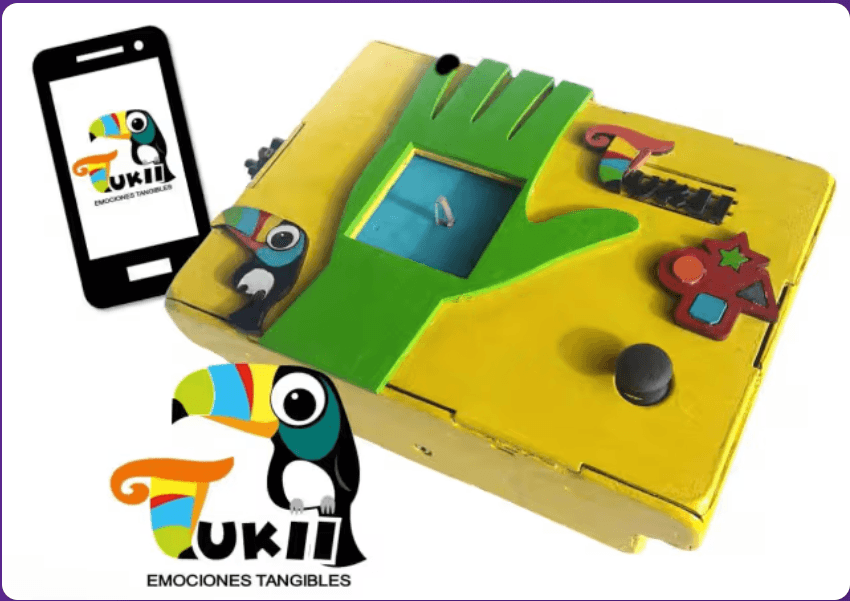
This thesis documented the design and implementation of TETv2.0, a tactile robotic system that translates visual patterns into tactile experiences for students with visual disabilities.
The system combines a 3-degree-of-freedom Cartesian robot, custom electronics, and a mobile application enabling teachers to create and play tactile educational content.
Validated with students at DECSEDIV Center, the project proved to be a viable methodological tool for inclusive education and became the foundation for Tukii.
Full executive summary →
Due to the need of educational resources for the inclusive education of people with visual disabilities, the design and implementation of a Cartesian robot that simulates a person who draws with his finger abstract patterns that the person with visual disability recognizes by means of the Touch on your palm or on your finger. This work is an update of the proof of concept proposed by the development group of the platform "Tukii Emociones Tangibles" (TET). The project will carry out an investigation of the sensitive tactile level, as opposed to the recognition of patterns by students of the Special Education Center for people with visual disabilities DECSEDIV. Its potential as a methodological tool is demonstrated in the generation of inclusive educational resources. KEYWORDS: INTERACTIVE ROBOT. VISUAL DISABILITY. SENSORY SUBSTITUTION MOBILE ACCESSIBILITY
3-DOF
Cartesian robot platform
ESP32
Embedded control stack
TETv2.0
Tactile substitution platform
DECSEDIV
Inclusive education partner
Media Gallery
Read the full thesis

Full document with diagrams, test results, and technical appendices.
Technical highlights
- 3-DOF Cartesian robot with emergency stop and safety interlocks
- Custom PCBs for sensing, power management, and motor control
- ESP32 firmware for trajectory handling, PID tuning, and safety states
- Mobile app for pattern recording, text-to-pattern editing, and playback
- Pattern sampling and ADC-to-mm conversion algorithms
- Mechanical, electrical, and usability validation with visually impaired users
Research process
Problem framing, objectives, methodology, and inclusive education context.
Technical implementation
System architecture, hardware, firmware, and mobile application details.
Results & validation
Testing methodology, user validation, and performance outcomes.
Impact & outcomes
Inclusive education impact, dissemination, and future directions.